
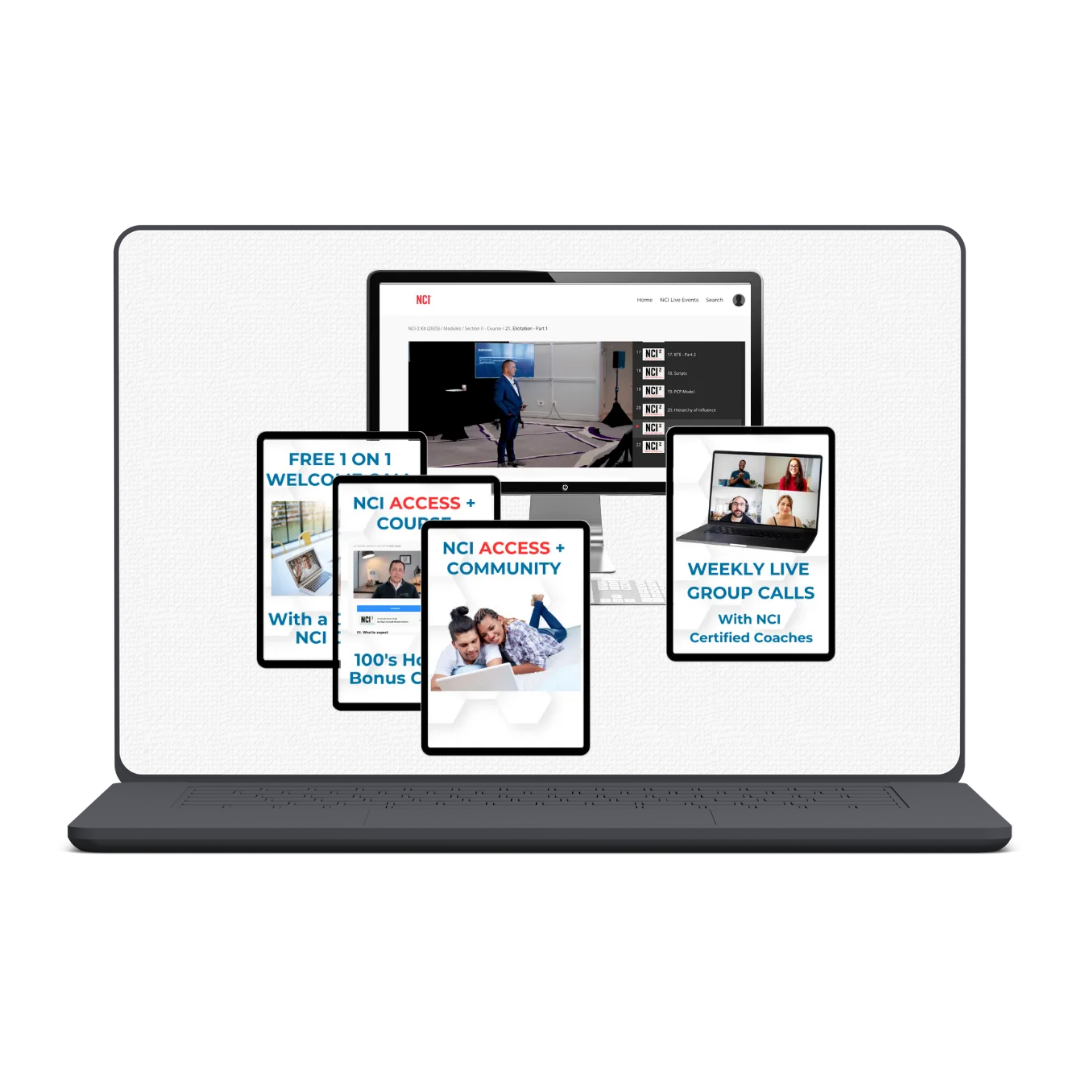
Chase Hughes – NCI-2 University

Chase Hughes – NCI-2 University
NCI-2 University (2026 Edition) by Chase Hughes
Learn behavioral profiling, human behavior analysis, deception detection, influence, communication, negotiation, and observation skills.
Most people spend their lives guessing.
Guessing what others are thinking.
Guessing who they can trust.
Guessing whether someone is confident, nervous, interested, deceptive, or completely disengaged.
The problem is that human behavior leaves clues.
Most people simply don't know how to see them.
NCI-2 University by Chase Hughes teaches a systematic framework for observing, analyzing, and interpreting human behavior in real time.
Rather than relying on myths, outdated body language tricks, or personality tests, the program focuses on structured behavioral observation and practical human intelligence skills.
The goal isn't mind reading.
The goal is developing better awareness, better judgment, and better decision-making in human interactions.
Key Benefits
✅ Improve behavioral observation skills
✅ Understand motivations and intentions
✅ Recognize behavioral patterns
✅ Improve communication effectiveness
✅ Strengthen negotiation awareness
✅ Develop situational awareness
✅ Build confidence in social interactions
✅ Make more informed decisions about people
What You'll Learn
The NCI-2 Behavioral Observation Framework
At the center of the program is a structured approach to human behavior analysis.
Rather than focusing on isolated signals, students learn how to evaluate:
- Context
- Behavioral clusters
- Emotional states
- Decision patterns
- Communication styles
The emphasis is understanding behavior as a complete system.
Behavior Profiling Fundamentals
Learn how to identify:
Motivations
What drives people to act.
Priorities
What they value most.
Emotional Drivers
The forces influencing decisions.
Communication Preferences
How different individuals process information.
Behavioral Tendencies
Patterns that appear repeatedly over time.
These observations can help improve communication and relationship management.
Human Behavior Analysis
One of the program's major focuses.
Learn how to observe:
- Verbal behavior
- Non-verbal behavior
- Decision-making patterns
- Emotional reactions
- Stress responses
The objective is becoming more aware of what people communicate beyond their words.
Situational Awareness
High-level performers often notice details others miss.
The course teaches methods for:
- Environmental observation
- Behavioral monitoring
- Context evaluation
- Pattern recognition
- Rapid assessment
These skills can improve awareness in professional and personal settings.
Understanding Stress Responses
People often behave differently under pressure.
Learn how to recognize:
- Changes in communication
- Emotional reactions
- Decision-making shifts
- Behavioral inconsistencies
- Performance under stress
Understanding these patterns can improve leadership and interpersonal effectiveness.
Influence & Communication
The program also explores how behavioral awareness improves communication.
Topics include:
Building Rapport
Creating stronger interpersonal connections.
Improving Conversations
Communicating more effectively.
Leadership Presence
Understanding how behavior influences authority and trust.
Persuasion Awareness
Recognizing factors that influence decision-making.
The focus is practical communication rather than manipulation.
Decision-Making Intelligence
Many poor decisions happen because people misread situations.
Learn frameworks for:
- Assessing interactions
- Evaluating behavior
- Identifying inconsistencies
- Improving judgment
- Making more informed decisions
This can be useful in business, leadership, sales, negotiations, and everyday life.
Behavioral Pattern Recognition
One of the most valuable long-term skills taught in the program.
Students learn how to identify:
- Recurring behaviors
- Consistent habits
- Predictable reactions
- Communication patterns
- Relationship dynamics
Pattern recognition often leads to better predictions about future behavior.
Negotiation & Leadership Applications
Behavioral intelligence can be particularly useful in:
Leadership
Understanding team dynamics and communication.
Negotiations
Reading interactions more effectively.
Sales
Building stronger relationships with prospects.
Business
Improving decision quality and interpersonal effectiveness.
Networking
Developing stronger professional relationships.
Developing Observation Skills
Most people observe casually.
NCI-2 focuses on intentional observation.
Learn how to:
- Notice more details
- Organize observations
- Interpret behavior systematically
- Avoid common assumptions
- Improve accuracy over time
Observation becomes a skill rather than a guess.
Real-Time Behavioral Analysis
The ultimate objective is improving awareness during live interactions.
Instead of analyzing behavior afterward, students learn frameworks for:
- Faster assessment
- Better awareness
- Improved responsiveness
- Stronger communication
- More confident decision-making
Who It's For
Business Owners
Seeking stronger people skills.
Sales Professionals
Looking to improve communication and rapport.
Leaders & Managers
Interested in team dynamics and influence.
Negotiators
Wanting greater behavioral awareness.
Coaches & Consultants
Working closely with clients.
Anyone Interested In Human Behavior
Who wants a deeper understanding of interpersonal dynamics.
What Makes NCI-2 Different?
Many body language programs focus on:
- Single gestures
- Quick tricks
- Oversimplified interpretations
NCI-2 emphasizes:
✅ Context
✅ Pattern recognition
✅ Behavioral systems
✅ Observation frameworks
✅ Real-world application
The goal is developing practical behavioral intelligence rather than memorizing isolated signals.
Chase Hughes – NCI-2 University
Name of course: Chase Hughes – NCI-2 University
Delivery Method: Instant Download (Mega)
Contact for more details: Digitalhub.courses@gmail.com